
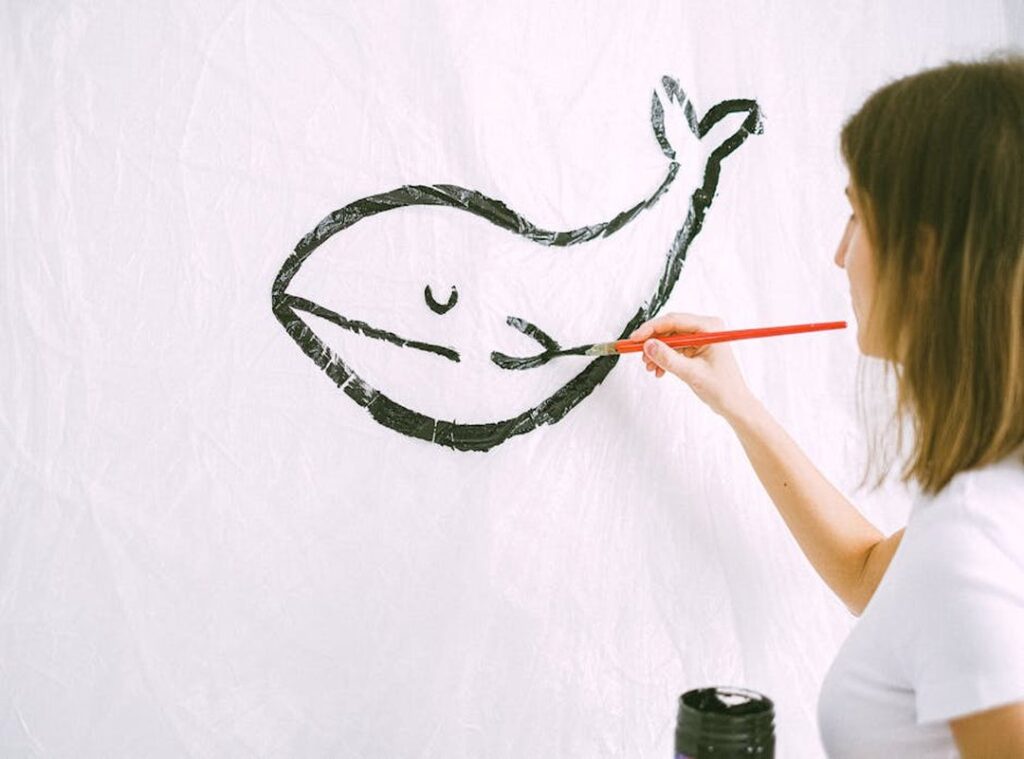
Imagine this: your friend, a colleague, or even your kid is stuck on a drawing and asks for help. You want to help, but you don’t want to take over the pencil. It’s a tricky spot.
This article promises to give you a simple framework for easy pagtulong sa kapwa drawing. The goal is to empower them, not discourage or overshadow their creativity.
Offering simple assistance in drawing is a valuable skill. It applies in both personal and professional settings. Think brainstorming sessions or helping a child with homework.
The approach here is rooted in the psychology of creative feedback. It’s about being thoughtful and strategic, not just giving random tips.
We’ll cover key areas like mindset, foundational techniques, questioning methods, and even modern digital tools. Let’s dive in.
The First Rule of Drawing Assistance: Adopt the Right Mindset
When you’re helping someone with their drawing, remember your role is a guide, not a master artist. Your goal is to help them realize their own vision, not impose yours.
Introduce the ‘Ask, Don’t Tell’ principle. Before offering any advice, ask questions like, “What are you trying to achieve here?” or “What part feels the most challenging?”
Focusing on effort and specific elements is key. Instead of saying, “That’s good,” try, “I really like how you’ve captured the texture on this part.” This approach helps them understand what they’re doing well and where they can improve.
Handling frustration is crucial. Both you and the person you’re helping might get frustrated. Patience is your best friend.
Celebrate small breakthroughs, and they add up.
Phrases to Use:
– “Can you tell me more about what you’re trying to do here?”
– “I see you’ve put a lot of effort into this. What do you think works well?”
– “Let’s focus on this part. What do you find challenging?”
Phrases to Avoid:
– “Just do it this way.”
– “You’re doing it wrong.”
– “It’s not that hard.”
Easy pagtulong sa kapwa drawing means being there for them, guiding, and supporting without taking over. Trust the process and let them grow.
Practical Help for Common Drawing Hurdles
Drawing can be tough, especially when you’re just starting out. Let’s tackle three core areas where beginners often struggle: basic shapes, perspective, and light/shadow.
For basic shapes, the key is to see the underlying forms in a complex object. Imagine an elaborate vase. Break it down into circles, squares, and triangles.
Use a light pencil to sketch these shapes together. This helps you understand the structure without getting overwhelmed by details.
Perspective is another tricky one, and start with a single vanishing point. Draw a horizon line and a single point on a separate piece of paper.
Show how lines converge towards that point. It’s like all the roads leading to a distant city. Simple, right?
Light and shadow can confuse even experienced artists. Think of an apple under a lamp. Identify the brightest spot (highlight), the darkest spot (core shadow), and the cast shadow.
Don’t get bogged down in technical jargon, and just focus on these three elements.
Here’s a pro tip: use ‘ghost drawing.’ Hover your hand over their drawing to demonstrate a motion or line without actually making a mark. This helps them visualize the movement and placement without feeling pressured.
Remember, the goal is to make drawing accessible. Easy pagtulong sa kapwa drawing. Keep it simple, and you’ll see improvement in no time.
Mastering the Art of the Guiding Question

Let’s be real. When someone asks for help, it’s tempting to just give them the answer. But that doesn’t help them grow.
Powerful questions, on the other hand, are the most effective form of easy pagtulong sa kapwa drawing. They encourage critical thinking and spark creativity.
What if you asked, “What would happen if the light source moved over here?” or “How could you make this part feel closer to the viewer?” These open-ended questions push them to think outside the box.
I’ve found the ‘What if…’ game to be a great technique. It’s playful and gets people unstuck. Try asking, “What if the character was ten times bigger?” or “What if this was happening underwater?” You’d be surprised how these simple changes can lead to new ideas.
Now, let’s talk about self-critique. Ask, “Which part of this drawing are you most proud of, and why?” Follow it up with, “Is there one part you’d like to improve?” This helps them reflect and identify areas for growth.
The best part? This method builds their confidence and problem-solving skills. Over time, they become better artists.
And that’s the real goal, right?
If you want more insights on how to guide and support others, check out Etrsbizness.
Leveraging Simple Tech for Collaborative Sketching
Collaborating on sketches can be tricky, especially when you want to keep the original work intact. Using digital tools for non-destructive feedback is a game changer. It’s perfect for remote collaboration or just keeping their original work clean.
- Use a simple screen-sharing tool with a drawing annotation feature.
- Take a photo of their drawing and import it into a free app like Procreate Pocket, ibisPaint X, or even Instagram Stories.
- Draw suggestions on a separate layer.
This method allows you to demonstrate a technique directly without ever touching their original piece. Respecting their ownership of the work is key. Easy pagtulong sa kapwa drawing, right?
Your Next Step in Becoming a Better Creative Mentor
Effective drawing assistance is about fostering confidence and problem-solving through gentle guidance, not technical mastery.
Adopt a guide’s mindset, and use questions to prompt discovery. Focus on one fundamental concept at a time.
The next time someone asks for help with a drawing, try using just one of the questioning techniques from this article before offering any direct advice.
By helping others unlock their own creative abilities, you can make a significant impact.