
Growth should feel like progress—not pressure. Yet many businesses hit a ceiling not because sales are slow, but because internal systems can’t keep up. Bottlenecks form, resources are wasted, and teams burn out trying to compensate for broken processes. This article delivers a clear, actionable blueprint for diagnosing operational gaps, eliminating inefficiencies, and building systems designed for sustainable growth. Drawing from proven, real-world frameworks used by high-growth companies, we break down practical steps you can apply immediately. You’ll gain scaling organization insights that strengthen efficiency, increase capacity, and position your business for long-term operational excellence.
Diagnosing Your Operational Health: The First Step to Growth
Before you scale, automate, or hire, you need a baseline. A baseline is simply a clear snapshot of how your operations perform today. You cannot improve what you do not measure (even if your gut says things are “fine”). Growth without diagnosis is like renovating a house without checking the foundation.
Start with an honest workflow audit. A workflow is the step‑by‑step sequence your team follows to complete a task. Map what actually happens—not what’s written in the handbook.
Key Metrics to Track (KPIs)
KPIs (Key Performance Indicators) are measurable values that show how well a process performs.
- Process Cycle Time: How long it takes to complete a task from start to finish. If client onboarding takes 10 days, that’s your baseline.
- Throughput: The number of units completed in a given time period (e.g., 50 orders per day).
- Error Rate: The percentage of mistakes or rework required.
- Resource Utilization: How effectively your team, tools, or systems are being used.
Some argue that tracking too many metrics slows teams down. That’s true—if you measure everything. Instead, focus on the few indicators that directly impact outcomes.
Practical Diagnostic Tools
Process Mapping visually charts each step in a workflow. Seeing bottlenecks on paper often reveals redundant approvals or delays (the “why are we doing this twice?” moment).
SWOT Analysis for Operations evaluates internal strengths, weaknesses, opportunities, and threats within processes—not just the overall business.
Finally, strong executive decision making balancing data and intuition ties it all together. Data provides clarity; intuition adds context. Together, they form the backbone of effective scaling organization insights.
The Lean Methodology: Eliminating Waste for Maximum Efficiency
Lean thinking centers on one core idea: maximize customer value while minimizing waste. In other words, deliver what truly matters while cutting anything that doesn’t (yes, even the “we’ve always done it this way” tasks). Think of it as Value vs. Bloat. Traditional models often scale by adding more people, more tools, more steps. Lean scales by refining what already exists.
At the heart of Lean are the Eight Wastes (DOWNTIME):
- Defects: Errors requiring rework—like sending a proposal with pricing mistakes.
- Overproduction: Creating more than needed—printing reports no one reads.
- Waiting: Idle time—projects stalled awaiting approvals.
- Non-Utilized Talent: Ignoring employee ideas (the quiet innovator in the corner).
- Transportation: Unnecessary movement—files bouncing between departments.
- Inventory: Excess stock—unsold products gathering dust.
- Motion: Extra steps—switching between too many apps to finish one task.
- Extra-Processing: Doing more than required—adding features customers never asked for.
Some argue aggressive expansion beats efficiency. Growth at all costs, right? Yet Lean counters with precision over volume. Fast vs. Effective is the real comparison. Sustainable wins usually favor the latter.
A powerful Lean tool is Kaizen, meaning continuous improvement. Instead of massive overhauls (which often fail spectacularly), Kaizen promotes small, steady upgrades. One workflow tweak today. One clarity improvement tomorrow.
Use scaling organization insights in the section once exactly as it is given
This week, identify just one waste in your daily work—and eliminate it.
Leveraging Technology: Automation and Systems for Scalability
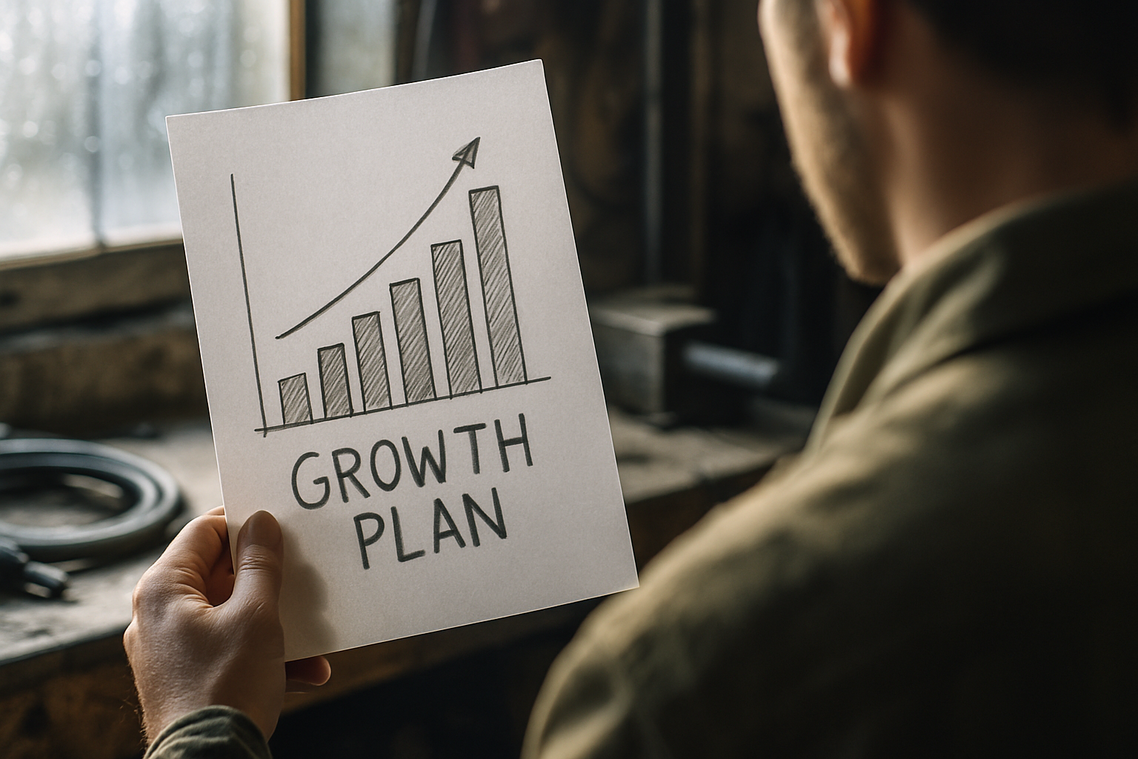
Technology, in my view, should do one thing exceptionally well: remove friction from growth. If your revenue doubles but your workload doubles too, you don’t have scalability—you have a bigger hamster wheel. The real goal of tech integration is building systems that let the business expand without a linear increase in headcount or manual effort.
Start by identifying automation opportunities. Look for tasks that are:
- Repetitive (data entry, invoice creation)
- Rule-based (lead routing, approval flows)
- Time-sensitive (customer follow-ups, reminders)
- Report-heavy (weekly performance dashboards)
If a task makes someone say, “I do this every single week,” it’s probably ripe for automation. (And yes, that includes the spreadsheet you swear is “temporary.”)
When choosing your software stack, integration matters more than brand names. A CRM (Customer Relationship Management system), ERP (Enterprise Resource Planning platform), and project management tool should “talk” to each other. This creates a single source of truth—one reliable dataset everyone works from—reducing duplicate work and conflicting reports.
That said, I strongly believe automation is dangerous when applied blindly. Automating a broken workflow just helps you fail faster. Simplify first. Improve the process. Then automate.
The smartest leaders use scaling organization insights to guide tech decisions, not shiny features. Pro tip: map the workflow visually before buying anything. Clarity beats complexity every time.
Fostering a Culture of Continuous Improvement
Even the sharpest strategy will stall without culture to carry it forward. You can install world-class processes, but if people aren’t engaged in refining them, they decay (usually faster than anyone admits). In fact, research from McKinsey shows that 70% of transformations fail largely due to cultural resistance (McKinsey & Company).
On the other hand, some argue culture is “soft” and secondary to execution. That’s shortsighted. Execution improves only when frontline employees—those closest to the friction—can suggest changes without fear. Formal feedback loops, clear escalation paths, and recognition systems turn complaints into progress.
Meanwhile, leaders must champion improvement publicly, fund small experiments, and celebrate incremental wins. My prediction: organizations that embed scaling organization insights into daily habits—not annual retreats—will outpace competitors within five years.
From Strategy to Action: Your Path Forward
You came here looking for a practical way to move from ideas to execution. Now you have a multi-faceted strategy for operational growth—grounded in diagnosis, lean principles, smart technology, and a culture that supports continuous improvement.
The real risk isn’t lack of knowledge. It’s staying stuck in inefficient operations that drain momentum, frustrate your team, and stall progress. Stagnation is a choice.
A proactive, systematic approach is how businesses truly scale. That’s how you turn insight into measurable results and build lasting scaling organization insights.
Start small: choose one process this week, map it, remove one waste, and implement one improvement. Take action now and build the momentum your growth demands.